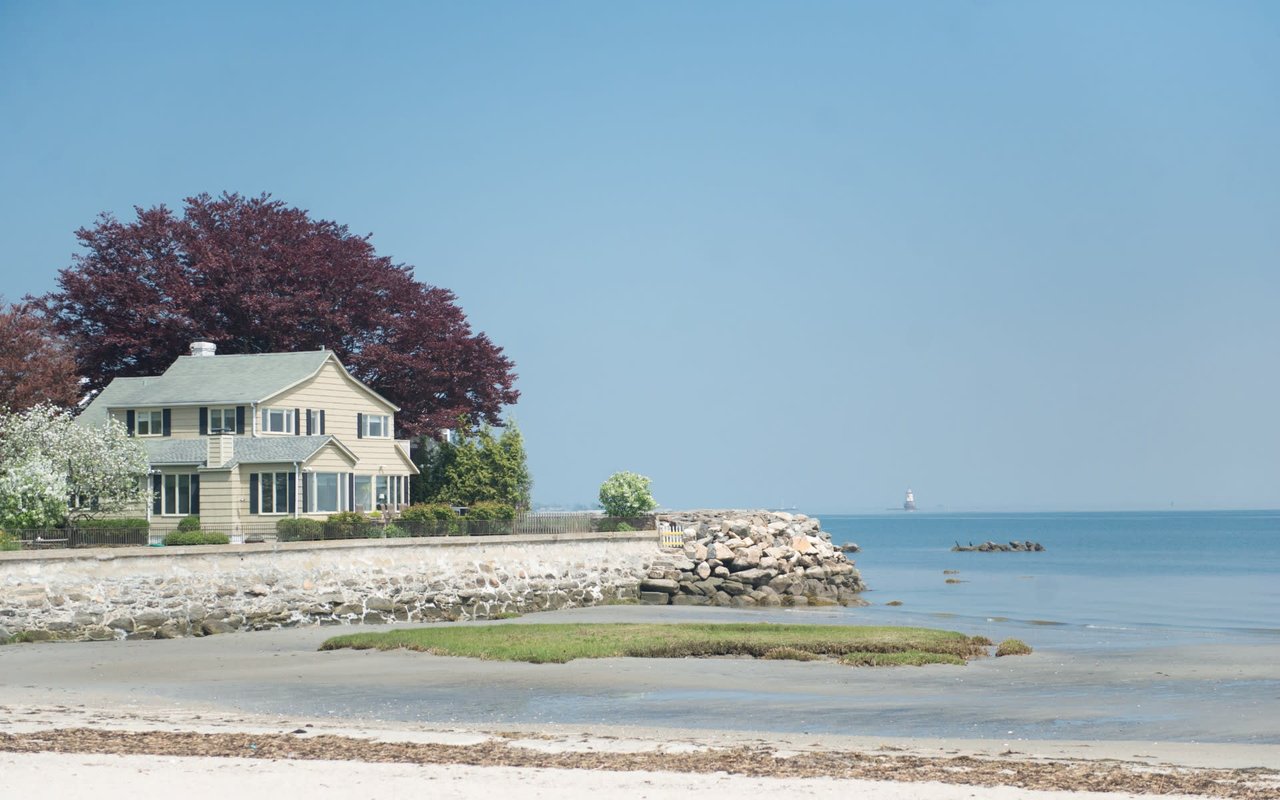
Welcome to Stamford
A fast-moving city with a small-town heart tucked into every corner outside downtown.
Stamford Real Estate Market Settled in 1641 and incorporated as a city in 1893, Stamford spent much of the 20th century as a manufacturing hub, once known as "Lock City" for the Yale & Towne lock factories that anchored its economy. Today the nickname that sticks is "The City That Works," and it fits: Stamford is Connecticut's second-largest city and a genuine financial and corporate center, home to major employers like UBS, just a 45-minute Metro-North ride from Grand Central. If you're exploring Stamford Real Estate and homes for sale, Dena Zarra and the Greenwich Street Teams, can help you navigate a market that looks different block by block.
What to Expect:
A downtown skyline giving way to quiet, leafy streets within minutes.
Corporate towers and the Palace Theatre anchor Downtown Stamford, where Metro-North, Stamford Town Center, and a dense restaurant scene keep things lively well into the evening. South of downtown, the South End's red-brick former factories, many tied to the Yale & Towne lock company, have been reborn as lofts, galleries, and restaurants around Harbor Point, with a waterfront promenade along the Stamford Canal and Long Island Sound. Head north or east and the pace slows considerably, into wooded lots and quiet residential streets.
The Lifestyle:
Whatever pace you're looking for, Stamford has a neighborhood built for it.
With roughly 135,000 residents spread across more than two square miles of city and a wide mix of housing, from high-rise apartments to colonials on half-acre lots, Stamford genuinely offers something different from block to block. Downtown and South End residents live an urban, walkable lifestyle. Cove, East Side, and Shippan bring sandy beaches and water views. North Stamford trades density for wooded privacy near the Bartlett Arboretum and the Stamford Museum and Nature Center. Commuters make up a real share of the population too. Stamford has an unusually high number of residents who work from home, a legacy of its deep bench of finance and tech professionals.
Unexpected Appeal:
A historic district built on an old lock factory's bones.
The South End Historic District, added to the National Register of Historic Places in 1986, preserves 19th-century Colonial Revival and Victorian architecture on a peninsula that was once one of the busiest industrial waterfronts in Connecticut. It's a rare case of a manufacturing neighborhood's original character surviving intact through a full redevelopment cycle, worth a walk even if you're not house hunting.
The Market:
Wide price swings depending on which Stamford you're buying into.
Citywide, single-family homes have recently traded with a median price in the high $700,000s, though that number blends very different submarkets. Larger homes and waterfront property in North Stamford and Shippan have shown some of the strongest appreciation in the city, while downtown and South End condos and townhomes offer a lower entry point with a more urban lifestyle attached. As with any city this size, the right comparison is neighborhood to neighborhood, not citywide averages.
You'll Fall in Love With:
The waterfront, whichever version of it you choose.
Whether it's West Beach and Cove Island Park on the Shippan side, or the Harbor Point promenade along the Stamford Canal in the South End, Long Island Sound is never far away. Add in Stamford's genuinely diverse restaurant scene, from waterfront seafood to the ethnic dining strip near downtown, and it's easy to see why buyers who thought they wanted Greenwich or Darien often end up looking seriously at Stamford instead.
Frequently Asked Questions
What should I look for in a real estate agent for Stamford, CT?
Stamford covers a wide range of neighborhoods and price points, so the right agent depends on what you're buying or selling. Dena Zarra of the Greenwich Streets Team at Compass has 25+ years of experience across the Old Greenwich, Riverside, and Stamford markets, with particular depth in Stamford's waterfront and North Stamford segments. She's also a Certified Senior Advisor (CSA), which matters if your move involves downsizing or a life transition rather than a straightforward trade-up.
Is Stamford, CT a good place to downsize or move for retirement?
Stamford offers something many nearby towns don't: one-level condo and townhome options downtown and in the South End within walking distance of restaurants, transit, and healthcare, alongside quieter single-family neighborhoods for buyers who still want space. That mix makes it a common landing spot for people rightsizing out of a larger Greenwich or Stamford-area home. Dena Zarra specializes in guiding clients through exactly this kind of transition, from timing the sale to sorting out what comes next.
What's the difference between Stamford's downtown condos and its residential neighborhoods?
Downtown and South End properties are mostly condos and townhomes built for walkability, close to Metro-North, shopping, and dining, and they tend to have a lower entry price point. Neighborhoods like North Stamford, Shippan, and Cove are primarily single-family homes on larger lots, with prices that climb with waterfront access and lot size. Which one fits depends on lifestyle as much as budget, and that's worth talking through with an agent who knows both sides of the city well.
How does Stamford compare to Greenwich for buyers considering both?
Stamford generally offers a lower entry price than Greenwich for comparable square footage, plus a more urban, amenity-dense downtown that Greenwich doesn't have. Greenwich tends to offer larger lots and a different pace, particularly in its waterfront neighborhoods. Buyers weighing both towns benefit from an agent who works across the Greenwich Streets Team's full footprint rather than one who only knows a single market.
Is now a good time to sell a home in Stamford, CT?
Market timing depends on your specific neighborhood, home type, and personal circumstances, so there's no single answer that applies citywide. Dena Zarra can walk you through what's actually happening in your specific block or building before you list.