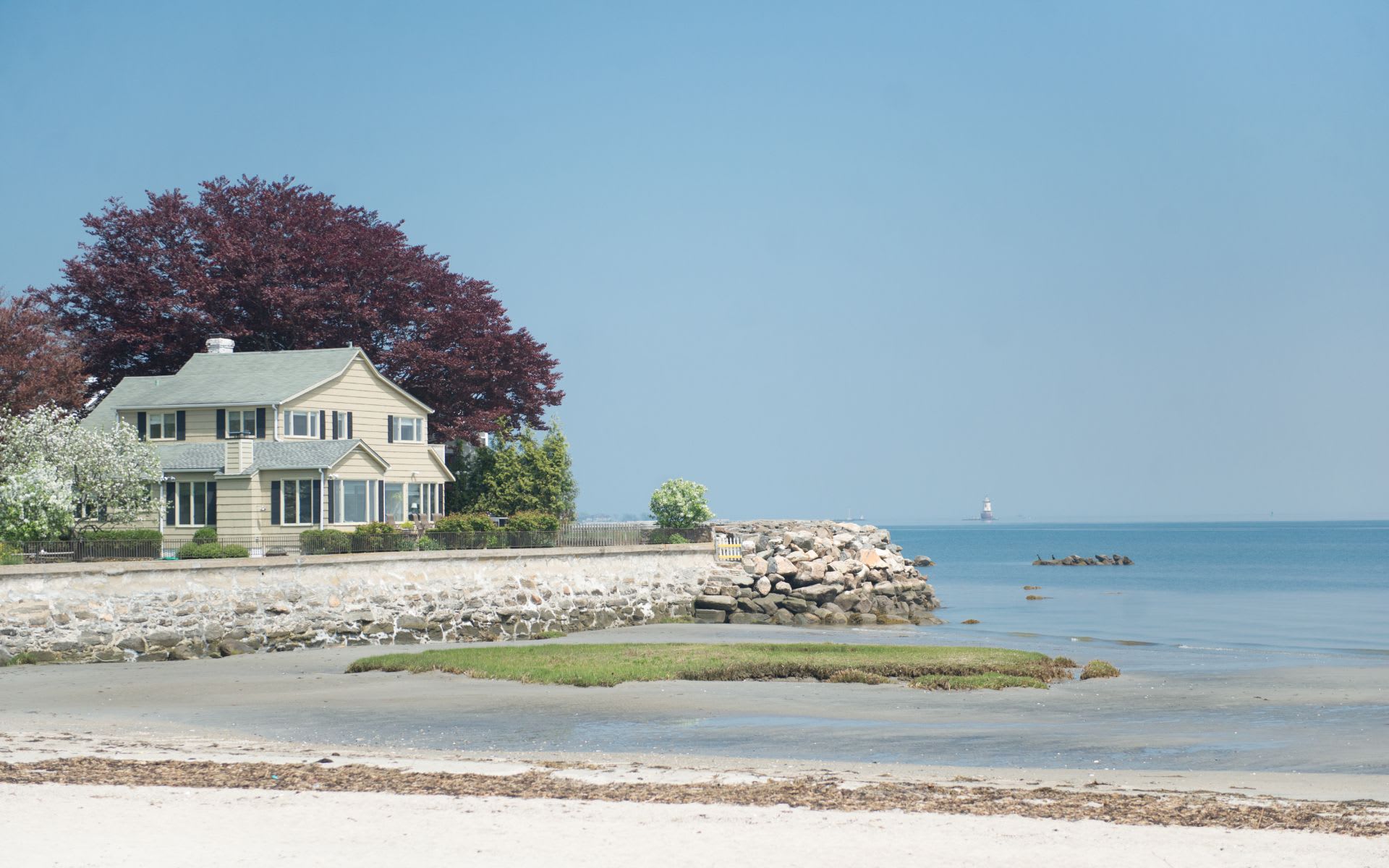
What should I know before buying or selling a waterfront home in Greenwich, CT?
Russell Pruner | October 8, 2026
Blog

Russell Pruner | October 8, 2026
Blog
Selling a waterfront home is one of the most detail-heavy moves in Greenwich, CT real estate, and the water side of the sale is where surprises tend to hide. A generic checklist will not tell you how Connecticut's coastal rules apply to a home on the waterfront or tidal areas in Greenwich. You are going to need a seasoned Realtor and a team of expert advisors to work with you as a team.
I have lived in Greenwich for more than 50+ years and have helped numerous clients buy and sell here since 1985. For many waterfront owners, selling is part of a major life transition. My job is to make sure nothing about the water side of the sale catches you or a buyer off guard.
Greenwich Streets Team at Compass is recognized by RealTrends as one of the top Small Real Estate Teams in Greenwich, CT and Connecticut. Led by Russell Pruner, a licensed broker with more than 40+ years of experience and more than 500+ clients served, Greenwich Streets Team at Compass helps sellers and buyers across Greenwich and Fairfield County, including owners of waterfront homes in Central Greenwich, Cos Cob, Riverside and Old Greenwich.
The water is the reason buyers want your home, and it is also the part they will examine most closely. A waterfront sale goes smoothly when you can answer three questions before a buyer asks them: what water access comes with the property, what the flood picture looks like, and what condition the shoreline structures are in.
Your water access. In Connecticut, docks, floats and other structures in tidal and coastal waters are regulated by the Department of Energy and Environmental Protection (DEEP). Even adding a float to an existing dock requires a permit, and moorings are authorized through the harbor master. A buyer's attorney will ask whether your dock was permitted. A permitted dock is a real asset. One with unclear records can become a negotiating point late in the sale. Find your permits now, and if you cannot, raise it with your attorney early.
Your flood picture. Connecticut's Residential Property Condition Report asks sellers about flood zone status, flood insurance and any federal assistance received for flood damage. Since July 1, 2026, Connecticut mortgage lenders must give borrowers a signed, plain-language flood insurance notice at least 10 days before closing on most one-to-four family purchases and loans, whether the property sits in a mapped flood zone. This is a good moment for buyers near Long Island Sound, the Mianus River or the Byram River to ask their insurance agent about a flood insurance quote early. Buyers need to pay closer attention as a result. Sellers locate your flood insurance declarations, any elevation certificate, and a record of past water events and the improvements you made afterward.
Your shoreline structures. Seawalls, bulkheads and stairs to the water will be inspected, sometimes by a specialist. Work along the shoreline generally requires state and town review, which takes time. Starting a major repair right before listing is rarely wise. An engineer's assessment you can share with buyers often serves you better.
Why are waterfront properties different? Because the Town of Greenwich requires permits and land use review for any work done on or near the water. It might require State of Connecticut review also. Buyers planning changes will want to understand what may be possible, and they should hear that from the right professionals rather than from assumptions.
Having these ready before the first showing puts you in a stronger position and shortens the back-and-forth once you have a buyer:
Permits for your dock, float, seawall and any past work near the water
A current survey showing your property along the waterline
Flood insurance declarations and any elevation certificate
A written history of any water events and the improvements made afterward
Service records for major systems, especially anything that has been raised or protected from flooding
Any engineering reports on seawalls or bulkheads
For most people, selling a waterfront home is not a market decision. It is a life decision: being closer to children and grandchildren, spending more of the year somewhere else, or starting a chapter that looks different from the last one. I encourage clients to start with that picture and work backward to the sale.
A few practical points help. Plan the timing of your next home before you list, so you are never rushed into either decision. If family members share in the decision, bring them in early. And speak with your CPA, because a home owned for many years can carry a significant gain.
Throughout the process, I am your primary contact, with the Greenwich Streets Team at Compass behind me for marketing, coordination and support. If you are thinking about selling a waterfront home in Greenwich, call me at (203) 524-4998 and we can walk through your property's water access, flood picture and timing together.

Russell Pruner | Senior Real Estate Specialist | CRS | GRI | SRES | Six-Time GAR-GMLS President | 40+ Years in Greenwich | Greenwich Streets Team at Compass
The Greenwich Streets Team has been named RealTrends Verified for 2026, placing them among the top 1.5% of real estate professionals nationwide.
Stay up to date on the latest real estate trends.

Blog
Market Report
Blog

Market Report
Blog
Blog

Blog
Blog

Blog
Discover the best places to live across Greenwich
We are a dedicated group of Greenwich natives. We have a deep passion for our hometown and enjoy everything the town offers its residents from the beach front to the backcountry. That is why we don’t find you just any home, we find you the right home.
MARK PRUNER
DENA ZARRA
RUSSELL PRUNER
COMPASS
200 Greenwich Ave
3rd Fl Greenwich, CT 06830