How Do You Protect a Greenwich Home Against Winter Cold and Storms?
Russell Pruner | November 14, 2026
Blog
Russell Pruner | November 14, 2026
Blog
Greenwich, CT real estate owners know that winter weather can put your biggest asset at risk, and a few simple steps before the first storm can help prevent costly repairs. The 2026 Extreme Weather Report from Hippo Insurance Services found that 68% of homeowners are concerned about extreme weather damaging their home, yet only 18% feel very prepared to protect it. The checklist below is general, and what it means for your particular home is a different question, so call me and we will go through it together.
How Do You Storm-Proof the House Itself?
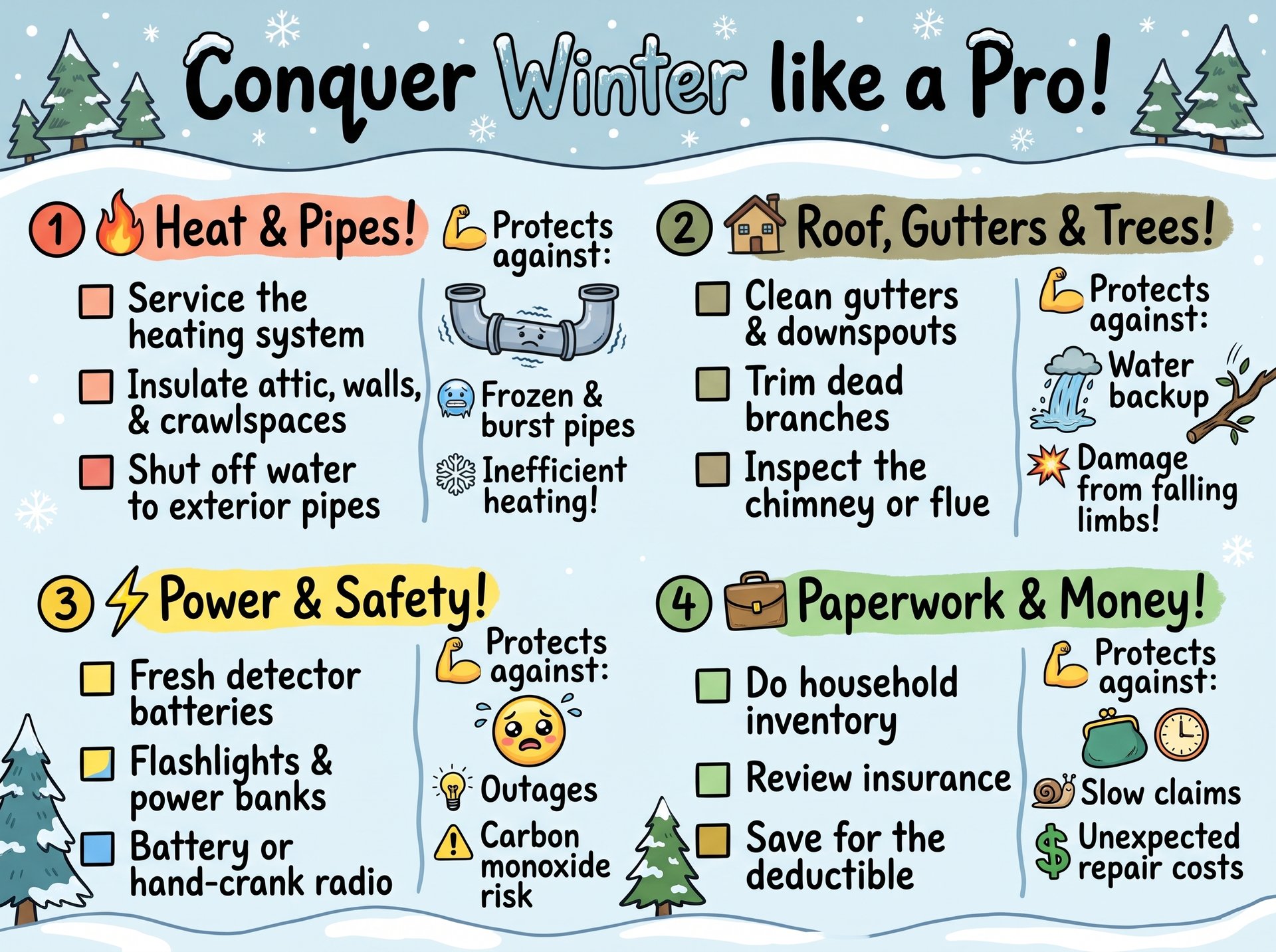
Start with the building. Insulate your attic, walls, and crawlspaces, and caulk and weather-strip doors and windows. Shut off water to exterior pipes and remove hoses that can freeze or burst. Have your heating system serviced so it works properly and efficiently.
Then look up. Clean your gutters and downspouts, trim trees, especially dead branches and any that could fall on your home, and have the chimney or flue inspected to make sure there are no obstructions.
Which Batteries and Shut-Off Valves Should You Check?
Before each winter, put fresh batteries in every smoke detector, carbon monoxide detector, and flashlight, and stock extras. Also make sure everyone in the house knows where the shut-off switches and valves for gas, electricity, and water are, and how to turn them off in an emergency.
What Should You Do Outside Before a Storm?
Put away lawn furniture, grills, and other loose items from the front and back yards. High winds can carry them away or cause damage to your property. Keep storm drains free of debris so water does not build up and flood your yard or encroach on your home. Allow airflow from soffits and roof vents to prevent condensation and potential mold.
How Do You Prepare for a Power Outage?
Plan for several days without power. A short list covers most of it:
• Portable chargers and extra power banks for phones, tablets, and laptops • A battery-operated or hand-crank radio
• Non-perishable food and water to last several days
• Prescription medications and pet supplies
If the power goes out, unplug your appliances to prevent a surge once it returns. Surge protectors for your outlets are a smart investment. Never use your oven or stovetop to heat your house, and never operate generators or grills near your windows. Both can put you at risk for carbon monoxide poisoning.
What Paperwork and Money Should You Have Ready?
Make a household inventory list. The National Association of Insurance Commissioners offers a free Home Inventory App that lets you record your belongings and upload photos, which can make it easier to file claims with your insurance company
Review your homeowners policy so you know what is covered, what is not, and what your deductible is. Losses from flooding are not typically covered, so consider flood insurance even if your home is not in a floodplain. Greenwich has a long shoreline along with rivers and harbors, so it is worth asking your insurance agent about your specific address. Keep your insurance documents where you can reach them quickly if you need to file a claim.
Set aside savings too. The Hippo survey found that only 22% of homeowners say they are financially prepared for an unexpected weather-related repair. Budgeting for your deductible and some additional repairs can keep a smaller issue from becoming an even costlier one.
How Will You Hear About Warnings in Time?
Sign up for your community's warning system and register for emergency alerts from organizations like the National Weather Service, the Emergency Alert System, and the National Oceanic and Atmospheric Administration. Alerts only help if they reach your phone before the storm does.
Why Does Storm Preparation Matter If You Plan to Sell?
A home that has been looked after tends to show better and gives a buyer's inspector fewer surprises. Heating systems, gutters, drainage, and trees near the house are the kind of items that come up. Taking care of them now protects your home this winter and may help preserve its value when you decide to sell.
Your Winter Checklist at a Glance
This article is general information and not legal, insurance, or financial advice. Please speak with your insurance agent and the right professionals for your home. If you are thinking about selling and wonder how your home's condition could affect its value, I am at 203-524-4998 or [email protected], and I will give you an honest answer.
Russell Pruner | Senior Real Estate Specialist | CRS | GRI | SRES | Six-Time GAR-GMLS President | 40+ Years in Greenwich | Greenwich Streets Team at Compass
The Greenwich Streets Team has been named RealTrends Verified for 2026, placing them among the top 1.5% of real estate professionals nationwide.
Losses from flooding are not typically covered by a standard homeowners policy. Consider flood insurance even if your home is not in a floodplain, and ask your insurance agent what makes sense for your address.
Put fresh batteries in all smoke detectors, carbon monoxide detectors, and flashlights before each winter, and keep extra batteries on hand.
Enough non-perishable food and water to last for several days. Add prescription medications and pet supplies to the list.
No. Never use your oven or stovetop to heat your house, and never run generators or grills near your windows. Both can put you at risk for carbon monoxide poisoning.
Budget enough to cover your insurance deductible, plus a cushion for additional repairs. Setting money aside can keep a smaller issue from becoming a costlier one.
Last updated: November 2026
Stay up to date on the latest real estate trends.
Blog

Market Report
Flat Sales are Good Sales | Second Best Year ever over $10M | Sales Fall Under $4M

Blog

Blog

Blog

Blog

Blog

Blog
Blog
Discover the best places to live across Greenwich
We are a dedicated group of Greenwich natives. We have a deep passion for our hometown and enjoy everything the town offers its residents from the beach front to the backcountry. That is why we don’t find you just any home, we find you the right home.
MARK PRUNER
DENA ZARRA
RUSSELL PRUNER
COMPASS
200 Greenwich Ave
3rd Fl Greenwich, CT 06830